Aluminum Polymer Capacitors Explained: How They Work and Why They Matter
2026-05-11
64
Catalog
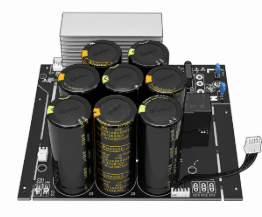
What Are Aluminum Polymer Capacitors?
Aluminum polymer capacitors are a type of aluminum electrolytic capacitor that uses a conductive solid polymer electrolyte instead of the liquid electrolyte found in conventional electrolytic capacitors. This solid polymer structure improves electrical efficiency, lifespan, and power delivery performance, making these capacitors highly suitable for modern high-speed electronic systems.
Compared with traditional liquid-electrolyte capacitors, polymer aluminum capacitors typically offer lower internal resistance (ESR), faster response to rapid load changes, reduced internal heat generation, improved ripple current capability, and longer operational lifespan.
Many polymer capacitors operate within ESR ranges of approximately 5–20 mΩ, while conventional aluminum electrolytic capacitors may range from 50–300 mΩ depending on capacitance and voltage rating.
These characteristics make conductive polymer capacitors especially useful in systems requiring stable voltage regulation and efficient power delivery.
Modern applications include AI servers, gaming motherboards, GPU power delivery systems, automotive electronics, telecom infrastructure, industrial power supplies, and DC-DC converters.
As electronic devices become smaller, faster, and more power-dense, solid polymer capacitors continue replacing traditional electrolytic capacitors in many advanced electronic designs.
Comparison of Polymer, Electrolytic, Ceramic, and Tantalum Capacitors
Although many capacitor technologies perform similar energy-storage functions, their internal materials and electrical behavior create major performance differences. Traditional electrolytic capacitors use liquid electrolyte, while polymer capacitors use conductive solid polymer materials that improve electrical conductivity and reduce internal resistance.
|
Parameter |
Polymer
Capacitors |
Traditional
Electrolytic Capacitors |
Ceramic
Capacitors |
Tantalum
Capacitors |
|
Electrolyte Type |
Conductive solid polymer |
Liquid electrolyte |
Ceramic dielectric |
Solid tantalum |
|
Capacitance Range |
Higher |
Very high |
Lower |
Moderate |
|
Typical ESR Range |
5–20 mΩ |
50–300 mΩ |
Below 10 mΩ |
20–80 mΩ |
|
Frequency Response |
Excellent |
Moderate |
Excellent |
Moderate |
|
Ripple Current Handling |
Excellent |
Moderate |
Moderate |
Lower |
|
DC Bias Stability |
Better |
Stable |
Can decrease under DC bias |
Stable |
|
Heat Generation |
Lower |
Higher |
Very low |
Moderate |
|
Thermal Stability |
Better |
Moderate |
Excellent |
Good |
|
Lifespan |
Longer |
Shorter |
Very long |
Long |
|
Dry-Out Risk |
Minimal |
High over time |
None |
None |
|
Voltage Availability |
Moderate |
Wide range available |
Low to moderate |
Moderate |
|
Mechanical Noise |
Minimal |
Minimal |
Can exhibit piezoelectric noise |
Minimal |
|
Reliability Under Surge |
Better |
Moderate |
Excellent |
More sensitive |
|
Relative Cost |
Medium to high |
Low |
Low to medium |
High |
|
Bulk Energy Storage |
Moderate |
Excellent |
Limited |
Moderate |
|
Typical Applications |
VRMs, power supplies, GPUs |
Industrial power supplies, bulk
storage |
Decoupling circuits, RF filtering |
Compact power regulation |
The lower ESR of polymer capacitors allows electrical current to move more efficiently through the component, reducing unwanted heat and improving voltage stability during rapid workload changes. Traditional electrolytic capacitors are still widely used in industrial power systems because they provide higher voltage capability, larger capacitance values, lower manufacturing cost, and better suitability for bulk energy storage applications.
Because of this, multiple capacitor technologies are often combined within the same system to balance performance, reliability, frequency response, and cost efficiency.
How Aluminum Polymer Capacitors Work
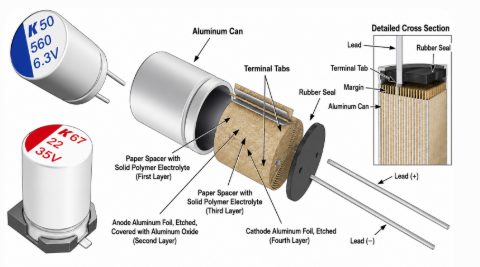
Figure 2. Internal Structure of an Aluminum Polymer Capacitor
Aluminum polymer capacitors store and release electrical energy through an electrochemical structure that combines etched aluminum foil, oxide dielectric layers, and conductive solid polymer materials.
These internal layers work together to improve electrical efficiency, reduce internal resistance, and support stable power delivery in modern switching power architectures.
Etched Aluminum Foil Structure
The aluminum anode foil is chemically etched to increase its surface area. A larger surface area allows the capacitor to store more electrical charge while maintaining a compact physical size.
This structure helps polymer capacitors achieve higher capacitance density, better energy efficiency, smaller package size, and improved power density.
Oxide Dielectric Layer
A thin aluminum oxide layer acts as the dielectric material between the anode and cathode. This dielectric layer prevents direct current flow, stores electrical energy, determines voltage capability, and controls insulation performance.
Because the oxide layer is extremely thin, aluminum polymer capacitors can charge and discharge very quickly. This improves response speed in rapid transient systems.
Conductive Polymer Cathode
The conductive solid polymer cathode replaces the liquid electrolyte used in conventional aluminum electrolytic capacitors. This polymer layer improves electrical conductivity, ripple current capability, switching efficiency, and overall electrical stability.
Electrical Performance and Reliability of Aluminum Polymer Capacitors
The electrical and thermal performance of polymer aluminum capacitors is one of the main reasons they are widely used in modern power electronics.
Low ESR and Power Efficiency
The low ESR characteristics of conductive polymer capacitors help maintain stable power delivery during rapid workload transitions in high-speed electronic systems. Compared with traditional electrolytic capacitors, polymer capacitors generally provide faster electrical response, lower impedance, more stable voltage delivery, and improved switching performance.
Ripple Current Performance
Ripple current refers to the alternating current component flowing through a capacitor during operation. Excessive ripple current can generate heat, increase stress on internal materials, and shorten component lifespan. Because conductive polymer capacitors have lower internal resistance, they can handle larger ripple currents with lower temperature rise. Many polymer capacitors support ripple current ratings ranging from several hundred milliamps to multiple amperes depending on package size and operating temperature. This improves switching stability, operational efficiency, and long-term performance.
These advantages are especially valuable in DC-DC converters, telecom power systems, automotive electronics, and industrial motor drives.
Thermal Reliability and Heat Management
Heat is one of the primary causes of capacitor aging and failure in electronic systems.
• Dry-Out Mechanism
Traditional liquid-electrolyte capacitors gradually degrade because the internal electrolyte slowly evaporates over time, especially under high-temperature operating conditions. This process is commonly known as capacitor dry-out. Dry-out can cause ESR increase, capacitance loss, voltage instability, ripple noise, swelling, and premature failure.
• Why Polymer Capacitors Last Longer
Solid polymer capacitors reduce this issue because they use conductive polymer materials instead of liquid electrolyte. As a result, they generally provide more stable electrical behavior over time, lower risk of leakage, longer service life, and better resistance to thermal degradation. Many polymer capacitors are rated for 2000–5000 hours at 105°C, while industrial-grade models may exceed 10,000 hours under controlled operating conditions.
• Temperature and Lifespan
According to common capacitor reliability guidelines, reducing operating temperature by 10°C can approximately double expected lifespan. Many automotive-grade polymer capacitors now support operating temperatures up to 125°C or higher.
• Environmental Reliability Factors
Environmental conditions can also affect capacitor lifespan. High humidity, heat, vibration, and electrical stress may gradually degrade internal materials and increase leakage current. To improve reliability, conformal coatings, sealed enclosures, controlled airflow, thermal isolation, and moisture-resistant PCB layouts are commonly used.
• Common Failure Modes
Although conductive polymer capacitors eliminate many liquid-electrolyte problems, they can still fail under extreme conditions. Common failure causes include excessive voltage stress, reverse polarity, thermal overload, PCB vibration, manufacturing defects, and overcurrent conditions. A common mistake is operating capacitors too close to their maximum voltage or temperature limits for extended periods. Proper derating and PCB design help minimize these risks.
Key Electrical Specifications and Performance Ratings
The electrical specifications listed in capacitor datasheets help determine whether a capacitor is suitable for a specific application.
|
Specification |
Typical
Range |
|
Capacitance |
10 µF to 1000 µF+ |
|
Voltage Rating |
2V to 63V |
|
ESR |
5–50 mΩ |
|
Temperature Range |
-55°C to +125°C |
|
Ripple Current |
Hundreds of mA to multiple A |
|
Lifetime |
2000–5000+ hours |
|
Package Types |
SMD and radial |
These specifications help evaluate electrical behavior, lifespan expectations, operating temperature limits, and power handling capability.
Higher ripple current ratings allow capacitors to handle larger alternating current loads with lower internal heating, improving reliability in power conversion systems.
Lower ESR improves switching efficiency and voltage regulation, while wider operating temperature ranges improve durability in automotive and industrial environments.
SMD polymer capacitors are commonly used in compact electronics, while radial capacitors are more common in industrial power systems and larger power supplies.
Understanding these specifications also helps explain the practical advantages and limitations of polymer capacitor technology in modern electronic systems.
Advantages and Limitations of Aluminum Polymer Capacitors
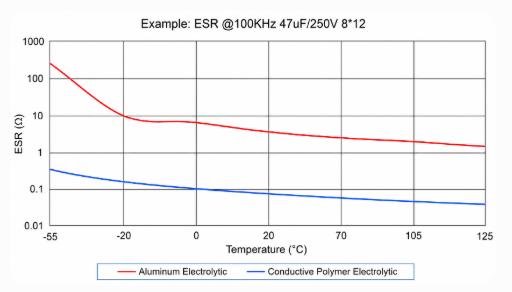
Figure 3. ESR vs Temperature Comparison of Polymer and Electrolytic Capacitors
Aluminum polymer capacitors provide several important advantages over traditional electrolytic capacitors, but they also involve engineering tradeoffs that should be considered carefully.
Advantages
• Better Switching Performance- Polymer capacitors respond quickly to rapid load changes in switching circuits. This makes them highly effective in CPU VRMs, GPUs, AI accelerators, and fast DC-DC converters.
• Lower Heat Generation- Because internal resistance is lower, less electrical energy is converted into heat during operation. This helps improve efficiency and operational stability.
• Longer Operational Lifespan- Unlike liquid electrolytic capacitors, conductive polymer capacitors do not suffer from severe electrolyte dry-out. This improves long-term durability in automotive electronics, industrial automation, and telecom systems.
Limitations
• Lower Voltage Capability- Most polymer capacitors are optimized for low- to medium-voltage systems. Traditional electrolytic capacitors remain more practical for high-voltage industrial systems, large power supplies, and bulk energy storage.
• Higher Cost- Conductive polymer materials and tighter manufacturing tolerances increase production cost compared with conventional liquid-electrolyte capacitors.
• Leakage Current Considerations- Polymer capacitors may have higher leakage current than ceramic capacitors. This can be important in ultra-low-power systems, battery-powered electronics, and precision analog circuits.
|
Capacitor
Type |
Relative
Cost |
|
Electrolytic |
Low |
|
Polymer |
Medium |
|
Ceramic |
Low to medium |
|
Tantalum |
High |
High-Performance Applications of Aluminum Polymer Capacitors
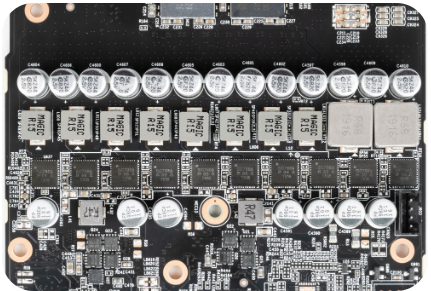
Figure 4. GPU VRM Circuit using Polymer Capacitors for Stable Power Delivery
Polymer aluminum capacitors are widely used in systems requiring stable voltage delivery, reliable ripple control, and efficient switching performance.
GPU VRM Power Stabilization: Modern GPUs generate rapid current spikes during rendering and AI workloads. Low-ESR polymer capacitors help stabilize voltage rails, reduce ripple noise, and improve transient response in VRM circuits.
Automotive Electronics: Automotive-grade polymer capacitors provide reliable operation under vibration, heat, and electrical stress in engine control systems, EV power converters, ADAS modules, and infotainment systems.
Telecom Infrastructure: Polymer capacitors help maintain stable power delivery and efficient ripple suppression in telecom power systems and networking equipment.
Renewable Energy Systems: Solar inverters and energy conversion systems use polymer capacitors to improve switching efficiency and operational stability.
Industrial Automation: Industrial control systems and motor drives use polymer capacitors for reliable power filtering and long-term durability.
DC-DC Converters: Polymer capacitors support fast switching performance, lower voltage ripple, and stable transient response in compact converter circuits.
Industrial Power Supplies: High ripple current capability and low ESR help improve efficiency and thermal performance in industrial power supply systems.
Multi-Capacitor Design Strategies
Modern electronic systems rarely depend on a single capacitor technology. Instead, multiple capacitor types are combined to optimize frequency response, ripple current handling, bulk capacitance, voltage stability, thermal performance, PCB space utilization, and cost efficiency.
|
Application |
Preferred
Capacitor Type |
|
GPU VRMs |
Polymer + ceramic |
|
Bulk power storage |
Electrolytic |
|
High-speed decoupling |
Ceramic |
|
Industrial AC filtering |
Film |
|
Automotive power stabilization |
Polymer |
As electronic systems become more power-dense, capacitor selection alone is often not enough. Many modern circuits combine multiple capacitor technologies to improve overall power delivery performance.
Parallel Capacitor Architectures
Connecting multiple capacitors in parallel improves total capacitance while reducing overall ESR and ESL. This helps reduce ripple voltage, improve transient response, spread thermal stress, and stabilize switching circuits.
Hybrid Polymer and Ceramic Designs
Modern PCB designs commonly combine ceramic capacitors for high-speed filtering, polymer capacitors for power stabilization, and electrolytic capacitors for bulk energy storage. This layered approach improves power delivery across a wider frequency range.
Decoupling in High-Speed Systems
High-speed processors create sudden current spikes that can destabilize power rails. Ceramic and polymer capacitors are placed near IC power pins to provide immediate transient current and suppress electrical noise. This improves signal integrity, processor stability, EMI reduction, and switching performance.
PCB Layout Optimization
Even high-quality capacitors can perform poorly if PCB layout is poorly designed. Important PCB practices include short copper traces, solid ground planes, reduced loop area, proper capacitor placement, and thermal optimization.
Future Trends in Polymer Capacitor Technology
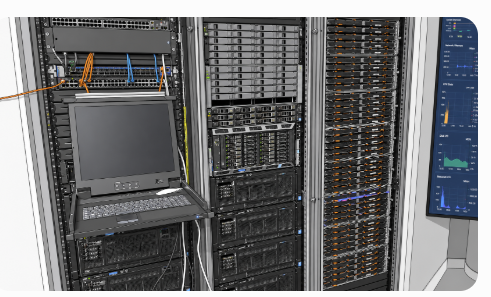
Figure 5. AI Server Infrastructure using High-Performance Power Systems
Demand for polymer aluminum capacitors continues increasing as electronic systems become smaller, faster, more power-dense, and more thermally demanding.
Conductive polymer capacitors are rapidly expanding in:
• Electric vehicles
• AI servers
• Renewable energy systems
• Industrial automation
• 5G infrastructure
• High-speed networking
Future capacitor technologies are expected to provide lower ESR, higher voltage capability, better thermal endurance, improved miniaturization, greater capacitance density, and longer operational lifespan.
As switching frequencies continue increasing in AI systems and EV power electronics, polymer capacitors are expected to play an even larger role in next-generation power management architectures.
Are Aluminum Polymer Capacitors Worth It?
Aluminum polymer capacitors are often worth the higher cost in systems where efficiency, stable power delivery, and operational reliability are important.
When Polymer Capacitors Are the Best Choice
They are especially valuable in AI servers, switching power supplies, GPU power delivery, automotive electronics, and temperature-sensitive systems.
Their electrical characteristics help improve voltage stability, switching response, efficiency, and long-term performance.
When Traditional Electrolytics May Be Better
Traditional electrolytic capacitors may still be more practical for high-voltage applications, large bulk energy storage, low-cost consumer electronics, and low-frequency filtering systems.
Because of this, polymer, ceramic, film, and electrolytic capacitors are often combined within the same design to balance cost, efficiency, and reliability.
For modern power delivery systems, conductive polymer capacitors are widely considered one of the most effective capacitor technologies available today.
How to Choose Aluminum Polymer Capacitors
Selecting the right aluminum polymer capacitor depends on electrical, thermal, and mechanical requirements within the target application.
Voltage Derating
A common recommendation is to avoid operating capacitors continuously at their maximum rated voltage.
For example, a 16V capacitor may be used in a 12V circuit, while a 35V capacitor may be selected for a 24V power rail. This helps improve long-term reliability and operational stability.
Capacitance Selection
Higher capacitance values are commonly used for bulk power stabilization, ripple reduction, and energy storage, while lower capacitance values are often used for decoupling applications, fast response circuits, and noise filtering.
ESR Requirements
Applications with rapid switching activity typically require lower ESR values to maintain stable power delivery and minimize ripple noise.
Common Selection Mistakes
A common design mistake is selecting capacitors based only on capacitance while ignoring ESR, ripple current rating, and operating temperature.
In fast-switching circuits, incorrect capacitor selection can increase ripple noise, heat generation, and voltage instability.
SMD vs Radial Capacitors
SMD polymer capacitors are commonly used in compact electronics, GPUs, motherboards, and mobile devices, while radial capacitors are more common in industrial power supplies, larger power converters, and through-hole PCB designs. The choice depends on available PCB space, thermal requirements, manufacturing process, and mechanical durability.
Conclusion
As electronic devices continue becoming faster, smaller, and more power-dense, capacitor performance becomes increasingly important for system stability and efficiency. Aluminum polymer capacitors provide important advantages such as low ESR, reduced heat generation, fast transient response, and improved operational lifespan, making them highly effective in modern power delivery systems. At the same time, traditional electrolytic, ceramic, and tantalum capacitors still remain valuable for specific voltage, filtering, and cost-related requirements. Understanding the strengths, limitations, and application tradeoffs of each capacitor type helps create more reliable and efficient electronic designs.
 O NAS
Zadowolenie klienta za każdym razem.Wzajemne zaufanie i wspólne interesy.
O NAS
Zadowolenie klienta za każdym razem.Wzajemne zaufanie i wspólne interesy.
test funkcji.Najwyższe opłacalne produkty i najlepsza usługa to nasze wieczne zaangażowanie.
Hot Artykuł
- LM358 Dualny wzmacniacz operacyjny Kompleksowy przewodnik: Pinouts, diagramy obwodów, odpowiedniki, przydatne przykłady
- Czy CR2032 i CR2016 są wymienne?
- Zrozumienie różnic ESP32 i Analiza techniczna i ESP32-S3
- Wybór odpowiedniej baterii: Przewodnik po AG4, LR626, LR66, 177/376/377, SR626 i SR626SW
- Podstawy tranzystorów BC547: układ pinów, obwody aplikacyjne, modele alternatywne/uzupełniające
- NPN vs. PNP: Jaka jest różnica?
- ESP32 vs STM32: Który mikrokontroler jest dla Ciebie lepszy?
- Co to jest MOSFET i jak to działa?
- Przekaźnik elektryczny Podstawowy: Działanie, typy i zastosowania
- Tranzystory PNP: struktura, zasada pracy i zastosowanie
 How a Switch Mode Power Supply (SMPS) Powers Electronic Devices
Często Zadawane Pytania [FAQ]
1. Why are polymer capacitors commonly used in GPU VRM circuits?
Modern GPUs create sudden current spikes during gaming, rendering, and AI workloads. Polymer capacitors help stabilize voltage rails during these rapid load transitions by reducing ripple voltage and improving transient response.
2. What makes polymer capacitors more reliable under high-temperature conditions?
Polymer capacitors use conductive solid polymer materials instead of liquid electrolyte, which greatly reduces the risk of electrolyte evaporation and thermal degradation. Many automotive-grade polymer capacitors can operate at temperatures up to 125°C or higher.
3. What are the main limitations of aluminum polymer capacitors?
Although polymer capacitors provide strong electrical performance, they usually support lower voltage ranges and higher manufacturing costs compared with traditional electrolytic capacitors. They may also have higher leakage current than ceramic capacitors in ultra-low-power circuits.
4. Why is voltage derating important when selecting polymer capacitors?
Operating a capacitor below its maximum voltage rating helps improve long-term reliability and reduce electrical stress. For example, using a 16V capacitor in a 12V circuit provides additional safety margin and improves operational stability.
5. What future trends are driving the growth of polymer capacitor technology?
The demand for polymer capacitors continues increasing because modern electronics are becoming smaller, faster, and more power-dense. Industries such as electric vehicles, AI servers, renewable energy systems, and 5G infrastructure increasingly require capacitors with lower ESR, better thermal endurance, and higher power efficiency.
Gorący numer części
 CL21B104KCFNNNE
 08055A221JAT2A
 GCM188L81C224KA37D
 CGA5H4X7R2J472K115AE
 GCM0335C1E150JD03D
 JMK212AC6106MG-T
 C3225Y5V1A476Z
 C1608X7R1H332M
 T491A335K016AT7280
 T495D337M010ATE100
- TPSD336M035S0300
- AGL1000V5-CSG281I
- Z8FMC08100AKEG
- PI90LV179WEX
- DS1245Y-70IND
- ISL21010CFH315Z-T7A
- HCNW4506#500
- PIC18LF2620-I/SP
- KSZ8091MNXCA-TR
- VI-J70-IY/F4
- LTM2892IY-S#PBF
- LTC6903IMS8#TRPBF
- OPA2377QDGKRQ1
- LM2901VD
- T491X227K016AG
- T495X336M035ZTE260
- XC5VLX110-3FF1153C
- AD7850JP
- AD7864AS-1
- AM29LV320DB-90WMF
- CM502.TR
- CXA1399Q
- K9F5608U0D-PCB0
- MAX786CAI-T
- MX29LV640DBTI-90G
- TMP86CH87RU
- UPD65938MC-P00-5A4-E2-A
- XC2V1000-4FG256C
- MJL21194G/MJL21193G
- QCPM-8883-TR1G
- S3C44B0X01-ED80
- A6817SEPTR-P6
- HN58V256ATI-12
- LR4720QC-2
- MN151638RZ
- NT68677AUMFG
- PX3684EDSG-R2-IB415-A
- AT49SV323C
- RB068MM100TR